
The resume summary is the first thing a recruiter reads, and often the only thing before they decide whether to keep going. A good one answers three questions in a few lines: who you are, what you are great at, and what you have achieved. Below is a simple formula and 15 examples to adapt.
A simple formula
[Role or title] with [X years] of experience in [specialty or industry]. [Top achievement with a number]. [What you bring or want next].
You do not have to follow it word for word, but it keeps your summary concrete, and concrete is what stands out. If you also want a one-line title above it, see resume headline.
Examples by role
Software engineer Backend engineer with 6 years of experience building payment systems in Python and Go. Cut API response times 40% and led the migration to AWS for 2M users. Looking to own platform reliability at a growing fintech.
Marketing manager B2B marketing manager with 8 years in SaaS. Built the content and SEO program that grew organic sign-ups from 500 to 9,000 a month. Strong in positioning, demand generation and managing small teams.
Sales representative Account executive with 5 years selling software to mid-market companies. Closed 120% of quota three years in a row and opened the company’s first deals in Germany. Known for long-term client relationships.
Product designer Product designer with 7 years of experience in mobile apps. Redesigned onboarding for a fitness app with 3M users, lifting 30-day retention by 18%. Comfortable from research to polished UI and design systems.
Data analyst Data analyst with 4 years in e-commerce. Built the reporting that helped cut return rates 12% and saved the team 10 hours a week. Advanced in SQL, Python and Looker.
Project manager Certified project manager (PMP) with 9 years leading construction and infrastructure projects up to $20M. Delivered 15 projects on time and under budget. Skilled at keeping clients, contractors and teams aligned.
Customer success manager Customer success manager with 6 years in B2B software. Raised net revenue retention from 98% to 115% across a portfolio of 60 accounts. Focused on onboarding, adoption and renewals.
Nurse Registered nurse with 5 years of experience in emergency care. Trained 12 new nurses and helped cut average triage time by 15 minutes. Calm under pressure, with strong patient communication.
Teacher High school math teacher with 10 years of experience. Raised pass rates in the final exam from 68% to 89% over three years. Passionate about making math practical and accessible.
The linked roles have a full sample resume around the summary, and there are more in our resume examples by job.
Examples by career stage
Recent graduate Business graduate with internships in marketing and sales operations. Ran the social media of a 2,000-member student association and grew engagement 3×. Eager to start a career in growth marketing.
No experience (first job) Reliable, organized high school graduate with volunteer experience coordinating weekend shifts for 15 volunteers at a local food bank. Looking for a first role in retail or customer service.
Career changer Former teacher moving into instructional design, with 8 years of creating lessons for diverse learners. Completed a certificate in e-learning design and built three online courses with 1,200 students.
Returning to work Operations coordinator returning after a two-year career break, with 7 previous years in logistics. Managed shipping for 40 retail stores and cut delivery delays by a third. Recently refreshed skills in SAP and Excel.
Senior leader VP of Engineering with 15 years of experience scaling teams from 10 to 120 people across three startups, two of them acquired. Focused on hiring, delivery and building engineering cultures people want to stay in.
Founder Founder with 12 years building and selling online businesses, from a bootstrapped agency to two acquired SaaS products. Strong in product, growth and building small, effective teams.
Starting out or changing fields, with little to summarize yet? A resume objective may serve you better, and the guide to a resume with no experience shows where it fits on the page.
Mistakes to avoid
- Clichés without proof: “results-driven team player with a passion for excellence”.
- No numbers: one concrete result beats five adjectives.
- Too long: more than four lines and it stops being a summary.
- One summary for every job: swap in the role’s title and skills each time.
- Talking about what you want only: lead with what you offer.
Your LinkedIn About section is your summary, expanded
Your LinkedIn About section plays the same role on your profile, with more room and a more personal voice. A good approach is to write your resume summary first, then expand it into About with a bit of story and what you are looking for.
It also works the other way round. LinkedIn to resume uses your About section as the summary of a classic resume, so you can start from it and cut it down to three lines in the preview.
On a Pixel CV, your About becomes the About box at the top of a 16-bit, RPG-style card, right under your name and level.
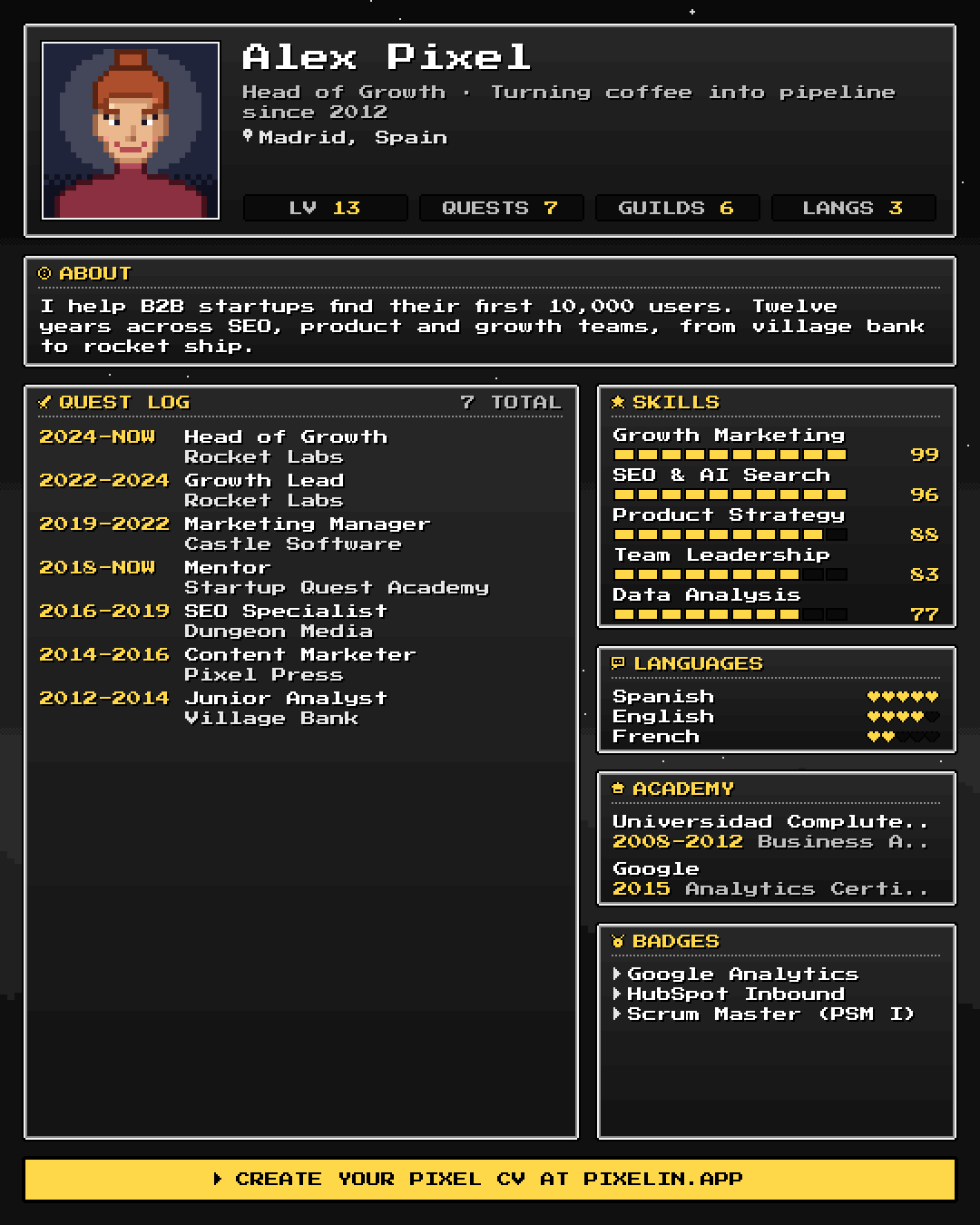
Curious how your own About reads in that box? Pixelin shows you from your LinkedIn PDF. Next, pick the skills to put on your resume.
FAQ
How long should a resume summary be?
Two to four lines, or about 40 to 80 words. It should be readable in a few seconds.
What is the difference between a resume summary and an objective?
A summary says what you offer, based on your experience. An objective says what you want. Most people should use a summary; an objective can help when you are just starting out or changing careers.
Should a resume summary be written in the first person?
Usually no. Resume summaries normally drop the "I", as in "Product designer with six years of experience". Your LinkedIn About section, by contrast, reads better in the first person.
Do I need a different summary for every job?
Ideally, adjust it for each application. Swap in the job title, the skills the role asks for and your most relevant result. It takes a minute and makes a real difference.
Is my LinkedIn About section the same as my resume summary?
They start from the same idea, but About can be longer and more personal. Many people write the resume summary first and expand it into their LinkedIn About.

Written by
On the internet since 1995 and launching online products since 2009, from one of the first app marketing agencies to tools like Pixelin. Writes about LinkedIn, resumes and standing out online.