
A resume objective is one to three sentences at the top of your resume that say what role you want and what you bring to it. It went out of fashion for experienced candidates, who are better served by a resume summary, but it is still the right tool in a few situations. Here is when to use one, how to write it, and examples you can adapt.
When an objective makes sense
- You are looking for your first job and have little experience to summarize.
- You are changing careers and need to explain the jump.
- You are applying for an internship, apprenticeship or graduate program.
- You are returning to work after a break.
- You are applying for a very specific role and want to make the match obvious.
If you have several years of relevant experience, use a summary instead.
A simple formula
[Who you are] seeking [role] at [company], bringing [your strongest skill or result] to [what you want to help with].
Keep it about them as much as about you: what you want and how you will help.
Examples by situation
First job (high school graduate) Dependable high school graduate seeking a part-time sales associate role at a local store. Brings strong customer service from two years of volunteering at community events, and is available evenings and weekends.
Recent college graduate Marketing graduate seeking an entry-level content marketing role. Brings a portfolio of 20 published articles, hands-on SEO from a university internship, and a habit of measuring everything.
Internship Second-year computer science student seeking a summer software engineering internship. Has built three full-stack projects in React and Node.js and wants to learn from an experienced product team.
Career change: teacher to instructional designer Former high school teacher with 8 years of lesson design, seeking an instructional designer role. Brings a certificate in e-learning design and a talent for making complex topics simple.
Career change: hospitality to sales Hotel front desk supervisor moving into B2B sales. Brings five years of handling demanding guests, upselling services and hitting monthly targets.
Returning to work Experienced office administrator returning after a three-year career break, seeking a full-time operations role. Recently refreshed skills in Excel, Google Workspace and project management tools.
Military to civilian Army logistics specialist with six years of experience transitioning to a civilian supply chain role. Managed equipment worth $3M and coordinated shipments for teams of 200.
Specific role and company Detail-oriented accounting graduate seeking a junior auditor position at Smith & Partners, bringing a strong GPA in auditing courses and an internship spent reconciling accounts for 30 small businesses.
Mistakes to avoid
- Only talking about yourself: “Seeking a role where I can grow” says nothing about what you offer.
- Being vague: name the role, and the company if you can.
- Copying the same objective everywhere: adjust it for each application.
- Writing a paragraph: three sentences is the maximum.
Where it goes
Right under your name and contact details, in place of a summary, under a standard heading such as Objective or Summary. If you already have a LinkedIn profile, LinkedIn to resume lays it out as a classic resume: click the summary in the preview, replace it with your objective and download the PDF.
Make the jump visible on LinkedIn too
Career changers and first-time job seekers benefit most from being seen. Once your resume is ready, share a Pixel CV on LinkedIn: a 16-bit, RPG-style card of your profile that gets people to stop and look, and makes it easy to start a conversation about the role you want.
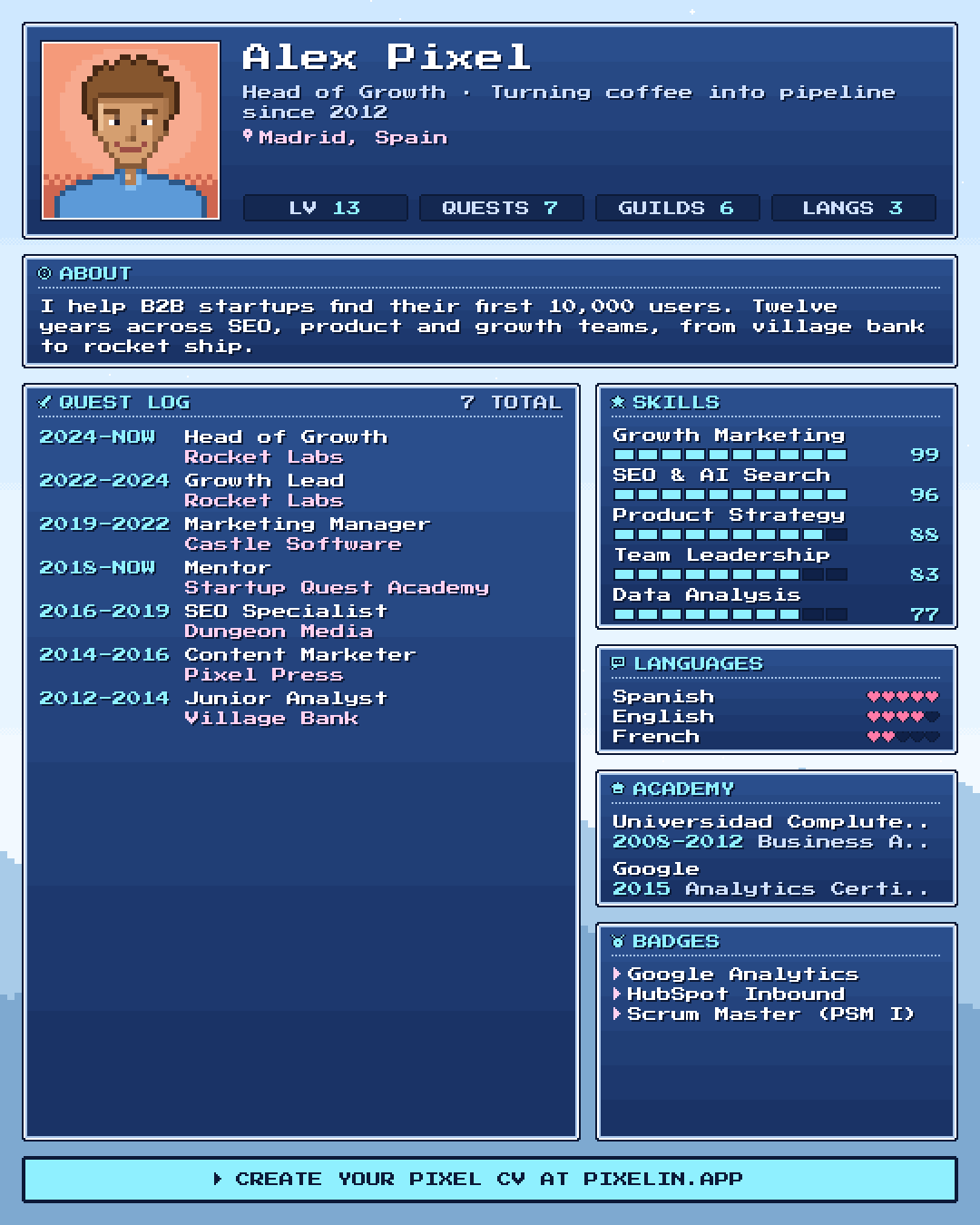
Make yours from your LinkedIn PDF in Pixelin and post it with a line about the role you are after. Starting from scratch? Read how to make a resume with no experience.
FAQ
Is a resume objective outdated?
Not when you use it for the right reason. For experienced candidates a summary works better, but an objective still helps when you are starting out, changing careers or applying for a specific program or internship.
What is the difference between a resume objective and a summary?
A summary highlights what you have already achieved. An objective explains what you want next and what you bring to it. With little relevant experience, an objective is often the stronger choice.
How long should a resume objective be?
One to three sentences, about 25 to 50 words. Anything longer reads like a cover letter.
Should I mention the company in my objective?
Yes, if you can. Naming the role and the company shows the resume was written for them, which makes it stand out from generic applications.
Can I use both a summary and an objective?
Pick one. You can blend them into a single short paragraph that mentions both what you offer and what you are aiming for.

Written by
On the internet since 1995 and launching online products since 2009, from one of the first app marketing agencies to tools like Pixelin. Writes about LinkedIn, resumes and standing out online.