Everyone starts with no experience, and employers hiring for first jobs know it. They are not looking for a long career history; they want signs that you are reliable, willing to learn and able to do the basics well. Your first resume’s job is to show those signs. Here is how.
What to include
You have more to put on a resume than you think:
- Education: school, expected graduation date, relevant courses, strong grades or awards.
- Skills: practical ones (Excel, Canva, a language, cash handling) and the soft skills you can back up.
- Projects: school projects, a website you built, a club event you organized, a YouTube channel.
- Volunteering: charities, community events, school helpers.
- Extracurriculars: sports teams, clubs, student government, music.
- Informal work: babysitting, tutoring, pet sitting, lawn care, helping in a family business.
- Certifications: first aid, a free online course, a driving license if the job needs it.
A simple one-page layout
- Contact details: name, phone, email, city, and your LinkedIn profile if you have one (see how to put LinkedIn on your resume).
- Objective: two sentences on the role you want and what you bring. See our resume objective examples.
- Education.
- Experience, including volunteering, projects and informal work, newest first.
- Skills.
- Activities and awards, if you have room.
Example
Alex Johnson · Austin, TX · alex.johnson@email.com · (555) 123-4567
Objective — Friendly, organized high school senior seeking a part-time barista role. Brings customer service from volunteer events and is available weekends.
Education — Riverside High School, expected June 2027. Honor roll (4 semesters).
Experience Volunteer, Austin Food Bank (2025–now): served 100+ visitors per shift and trained 5 new volunteers. Babysitter, self-employed (2024–now): regular care for three families; trusted with scheduling and meals.
Skills — Customer service · Cash handling · Spanish (conversational) · Canva · Teamwork
Activities — Soccer team captain (2026) · School newspaper writer
For first jobs that often hire beginners, there are full samples in our resume examples, for example barista, cashier and retail sales associate.
Tips to stand out as a beginner
- Describe what you did and what came of it. “Organized a bake sale that raised $600” beats “helped with a bake sale”.
- Use numbers wherever you can: people served, money raised, hours per week.
- Tailor it to each job: put the most relevant activity first.
- Keep the design simple and the file a PDF.
- Check spelling twice and ask someone else to read it.
- Use a professional email, ideally your name.
- Line up references, but leave them off the page. Ask a teacher, coach or volunteer coordinator now, so they are ready when an employer asks. More in references on a resume.
Get seen, not just sent
With little experience, the people you know matter as much as the resume. If you do not have a LinkedIn profile yet, create one: a headline, a photo, your education and the activities above are enough to start. Connect with teachers, coaches and family friends, and tell them what kind of job you are looking for.
Once the profile is there, you can do two things with it. LinkedIn to resume turns it into a first draft of the one-page resume above, which you can edit before you download it. And a Pixel CV turns it into a 16-bit, RPG-style card for a post saying you are looking: your first steps become a Quest Log people actually look at.
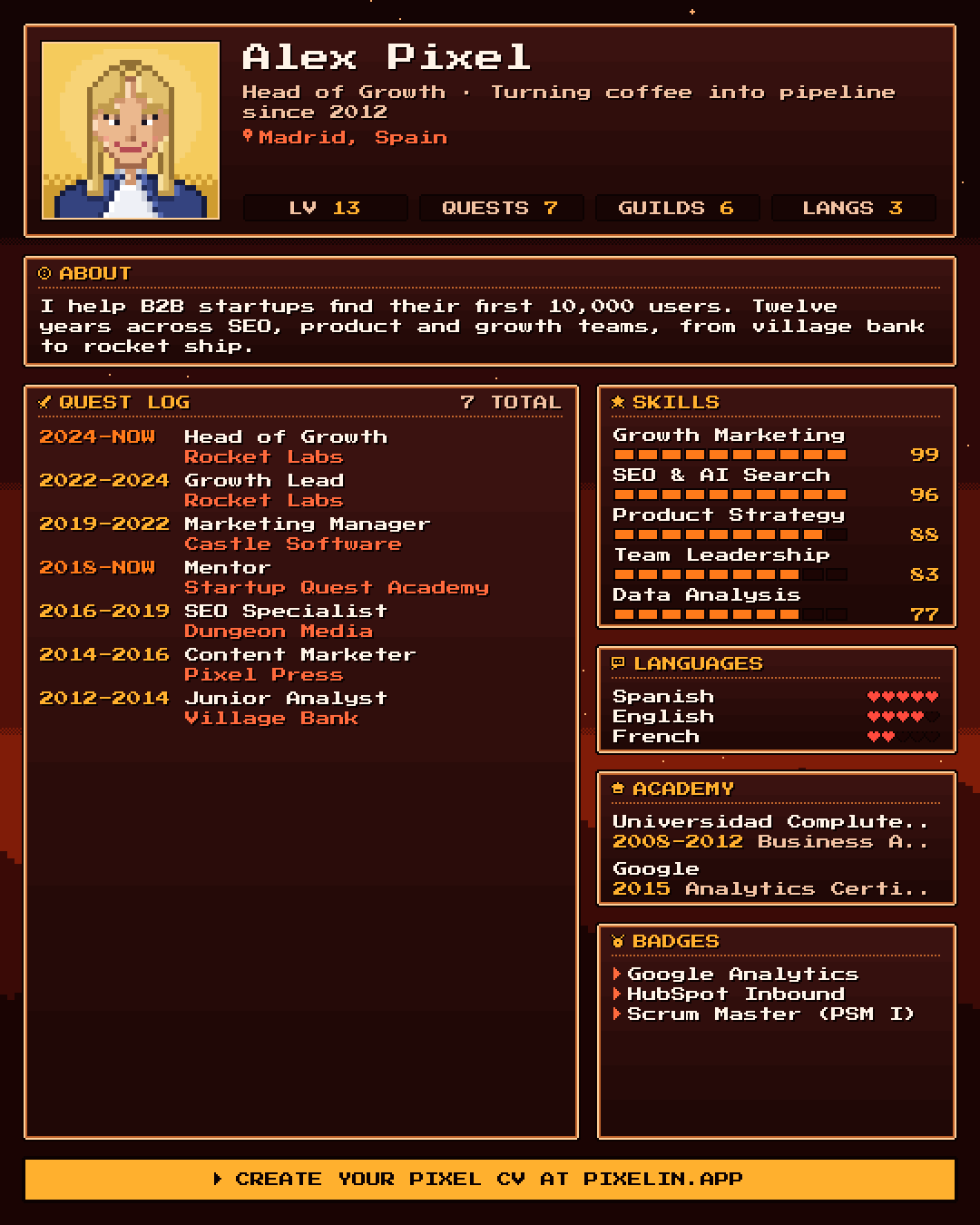
Both start from the same LinkedIn PDF: make your Pixel CV here. Then pick the skills to put on your resume.
FAQ
What do I put on a resume if I have no experience?
Education, skills, school or personal projects, volunteering, extracurricular activities, informal work such as babysitting or tutoring, and any certifications. Each one shows something an employer cares about.
How long should my first resume be?
One page. With little experience, a tight page with relevant details reads much better than a longer one padded with filler.
Should I include my GPA?
Include it if it is strong, usually 3.5 or higher, or if the job asks for it. Otherwise leave it out and let your skills and projects speak.
Do I need a cover letter for my first job?
It helps, especially when you have little experience. A short note on why you want this job and what you can bring often makes the difference.
Should I put references on my resume?
No. Just have two or three people ready, such as a teacher, coach or volunteer coordinator, and share their details when the employer asks.

Written by
On the internet since 1995 and launching online products since 2009, from one of the first app marketing agencies to tools like Pixelin. Writes about LinkedIn, resumes and standing out online.