
A designer’s resume is judged twice: once by software and once by people with an eye for design. It has to look good enough to prove your taste and stay simple enough for applicant tracking systems (ATS) to read. Here is how to get both right.
Your portfolio is the real resume
For designers, the resume’s main job is to get someone to open your portfolio. So:
- Put the portfolio link in your contact section, next to your email and LinkedIn.
- Make sure it opens on your best work, not an “about me” page.
- Use a short, custom URL you control, such as
yourname.design.
Design it like a designer (with restraint)
- One page, a clear grid and generous white space.
- One or two typefaces at most, with a clear hierarchy.
- One accent color, used for headings or links.
- No skill bars or star ratings for tools: “Photoshop 80%” is not something a recruiter can check, and an ATS cannot read a bar. List the tools instead.
- No photos or heavy graphics in the version you upload to job sites.
Make it ATS-friendly
- Export a text-based PDF from InDesign, Figma or Illustrator, never an image or a flattened file.
- Keep text as real text, not outlined or inside images.
- Prefer a single column for the online version; two columns can scramble the reading order.
- Use standard headings: Experience, Education, Skills.
- Mirror the keywords in the job description, such as “brand identity” or “UI design”.
A good trick is to keep two versions: a designed PDF to send to people directly, and a cleaner one for online application forms. If your LinkedIn profile is up to date, Pixelin’s LinkedIn to resume tool gives you the plain version in a minute: one column, standard headings and real text, editable before you download it.
Skills to list
Tools
- Figma
- Adobe Illustrator
- Photoshop
- InDesign
- After Effects
- Canva for quick social content
Disciplines
- brand identity
- typography
- layout
- packaging
- UI design
- motion
- illustration
- print production
Working skills
- presenting work
- taking feedback
- working with developers and marketers
- meeting deadlines
More ideas in skills to put on a resume.
Bullets that show impact
Design work is easier to judge when you show what it changed:
- Redesigned the brand identity for a regional coffee chain, used across 25 stores and packaging.
- Designed social templates that cut production time for the marketing team from two days to two hours.
- Created landing pages that lifted sign-up conversion 22% in A/B tests.
- Led design for a 300-page annual report delivered on time to print.
Show your style where people scroll
A resume gets you through the door; your work gets you remembered. On LinkedIn, a visual post stands out far more than text. A Pixel CV turns your profile into a 16-bit, RPG-style card: a playful way for a designer to show personality alongside a clean, professional resume. Its skill bars are part of the game look, like the level and the hearts, which is exactly why it belongs in a post and not in your application.
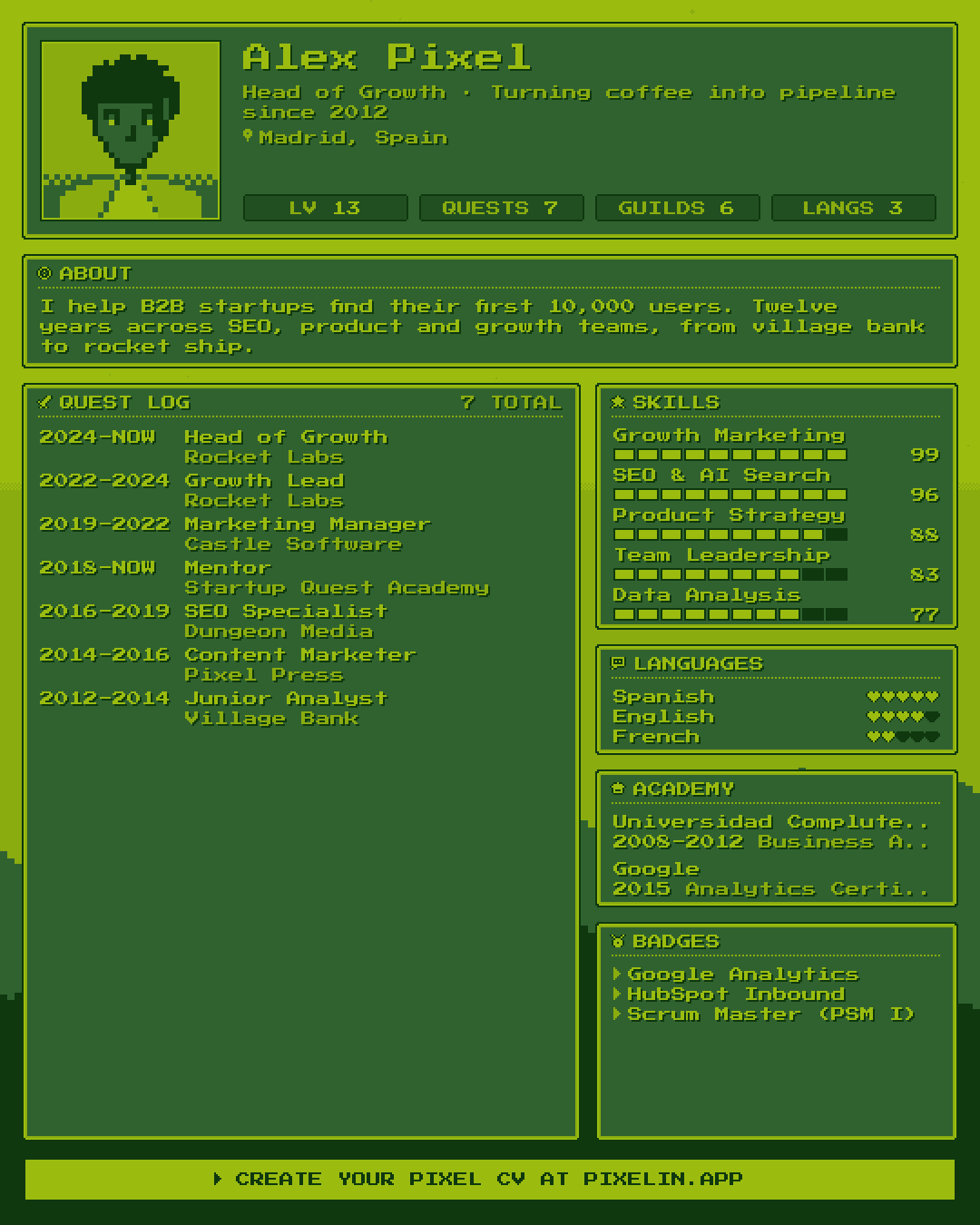
Make one from your LinkedIn PDF in Pixelin and pick the style closest to your own taste, from Game Boy green to Noir. Applying to a design role in another country? Check first whether they expect a CV or a resume.
FAQ
Should a graphic designer resume be creative?
It should show taste, not tricks. A clean, well-typeset layout with a touch of color proves your skills better than heavy graphics, and it is far easier for applicant tracking systems to read.
Do graphic designers need a portfolio link on their resume?
Yes. For designers the portfolio matters more than the resume itself. Put the link in your contact section and make sure it opens on your best work.
How long should a graphic designer resume be?
One page for most designers. Let the portfolio carry the detail.
Can applicant tracking systems read designed resumes?
Often not well. Text inside images, multiple columns, icons and tables can confuse them. Export a text-based PDF and keep a simpler version for online applications.
What skills should a graphic designer list?
The tools and disciplines the job asks for, such as Figma, Adobe Illustrator, InDesign and Photoshop, branding, typography, layout and motion, plus collaboration and presenting work to clients.

Written by
On the internet since 1995 and launching online products since 2009, from one of the first app marketing agencies to tools like Pixelin. Writes about LinkedIn, resumes and standing out online.