You will probably spend more time thinking about whether to quit than about how. But the how is what people remember. The industry is smaller than it looks, your old manager may be your reference for the next ten years, and former colleagues turn up later as clients, hiring managers or the person who recommends you. Here is how to leave a job so that every door stays open, step by step.
Before you say anything
- Have the new offer in writing, signed if possible, with the start date. Do not resign on a verbal promise.
- Read your contract again: notice period, unused vacation, bonuses that depend on still being employed on a date, non-compete and confidentiality clauses, and anything you must return or pay back, such as a training or relocation bonus.
- Write down your achievements while you still have the numbers: results, projects, budgets, team sizes. Once you leave, you lose access to the dashboards. These are the lines that will make your next resume stand out.
- Save your personal things from work devices, such as photos or your own contacts. Do not copy company files, client lists or code: that is the one thing that can turn a good exit into a legal problem.
- Tell no colleague before your manager. News travels, and your manager should hear it from you.
Tell your manager first, in person
Ask for a short meeting, in person or on a video call, not a chat message. Keep it brief, warm and final. For example:
I wanted to tell you first: I have accepted an offer from another company, and I am resigning. My last day would be [date], in line with my notice period. I have really valued working with you, especially [something specific]. I want to leave things in good shape, so I will put together a handover plan this week.
A few things that help:
- You do not owe a long explanation. “It was the right opportunity for me” is enough.
- Do not criticize the company, your manager or colleagues, even if they are part of the reason. It changes nothing now and it is what people would remember.
- Agree on how the team will be told and who tells clients. Then stick to it.
Put it in writing: a resignation letter
The same day, send a short letter or email to your manager, copying HR if that is the custom. It makes the date official. It is not the place for feedback.
Subject: Resignation – [Your name]
Dear [Manager’s name],
Please accept this letter as formal notice of my resignation from my position as [job title] at [company]. My last day will be [date], in line with my notice period.
Thank you for the opportunity to work here and for your support, especially [one specific thing]. I will do everything I can to make the handover smooth, and I am happy to help train my replacement.
Best regards, [Your name]
Need a different tone, an email version or a letter for when you can’t give a full two weeks? There are nine ready-made versions in our two weeks notice letter templates.
Work out your notice period
How much notice you give depends on where you work and on your contract:
- In the US, most jobs are “at will” and two weeks is the custom, not a legal rule. Senior roles often give more.
- In the UK and most of Europe, the notice period is set by law, your contract or a collective agreement, and a month or more is common. Your contract is the place to check.
Your employer may ask you to leave sooner, put you on garden leave (paid, but away from work) or pay you in lieu of notice. If something is unclear, such as what happens to unused vacation days, ask HR in writing. Rules vary a lot between countries, so when in doubt, check with HR or a local employment adviser rather than relying on a general guide like this one.
If they make a counteroffer
A counteroffer is flattering, and it can be tempting. Before you say yes, ask yourself why you started looking. If the only reason was pay and the new offer fixes it, it can make sense. If it was the work, the manager, the lack of growth or the culture, a raise does not change any of those, and your employer now knows you were ready to leave.
Whatever you decide, decide fast and say it kindly. Do not use a counteroffer to bargain with your new employer.
Hand over your work properly
This is what people will judge you on. A good handover means nobody needs to call you after you leave:
- A handover document with each project, its status, next steps, deadlines, key contacts, where the files are and any passwords or accounts that need moving to someone else (through the company’s own tools, never in the document itself).
- Introductions between your replacement or teammates and the clients, partners and suppliers you deal with.
- Finish what you can, document what you cannot. Do not start large projects in your last weeks.
- Stay fully present. Coming in late and checking out early in your notice period erases years of good work.
The exit interview
If HR offers one, keep it calm and constructive. Honest, specific feedback can help the people who stay, such as “the team needs a clear career path for senior engineers”. Venting about individuals helps nobody and can follow you. If you would not say it to their face, leave it out.
Your last days and goodbyes
- Return everything: laptop, phone, badge, cards, keys.
- Sign out of personal accounts on work devices.
- Send a short goodbye message to the team on your last day:
Today is my last day at [company]. Thank you for [two or three years] of great work together. I have learned a lot from all of you, especially [something specific]. I would love to stay in touch: you can find me on LinkedIn at linkedin.com/in/yourname, or write to me at you@email.com.
- Ask for a LinkedIn recommendation from your manager or a close colleague now, while your work is fresh. A short, specific one is worth more than a long, general one.
- Connect on LinkedIn with the people you want to keep in touch with.
Update LinkedIn and your resume, in that order
Wait until your manager and team know. Changing your profile first can announce your departure before you do. When you add the new role, LinkedIn may offer to notify your network: turn that off if you want to make your own announcement later.
Then:
- End the old role with your last month, and add the achievements you wrote down, with numbers.
- Add the new role once you have started or your start date is close.
- Update your headline and About section to match. Our resume summary examples work for the About section too.
- Refresh your resume while it is all fresh. Save your profile as a PDF and drop it into LinkedIn to resume to get an updated, ATS-friendly resume in a minute, ready for the next time you need one.
Announce your new job with a Pixel CV
The last step is the nicest one: telling your network. A “starting a new position” post is one of the posts that gets the most warm replies on LinkedIn, and it is a good moment to thank your old team in public.
A Pixel CV makes that post stand out from the rest: your new role appears at the top of a 16-bit Quest Log, your years of experience become your level, and your skills turn into stat bars.
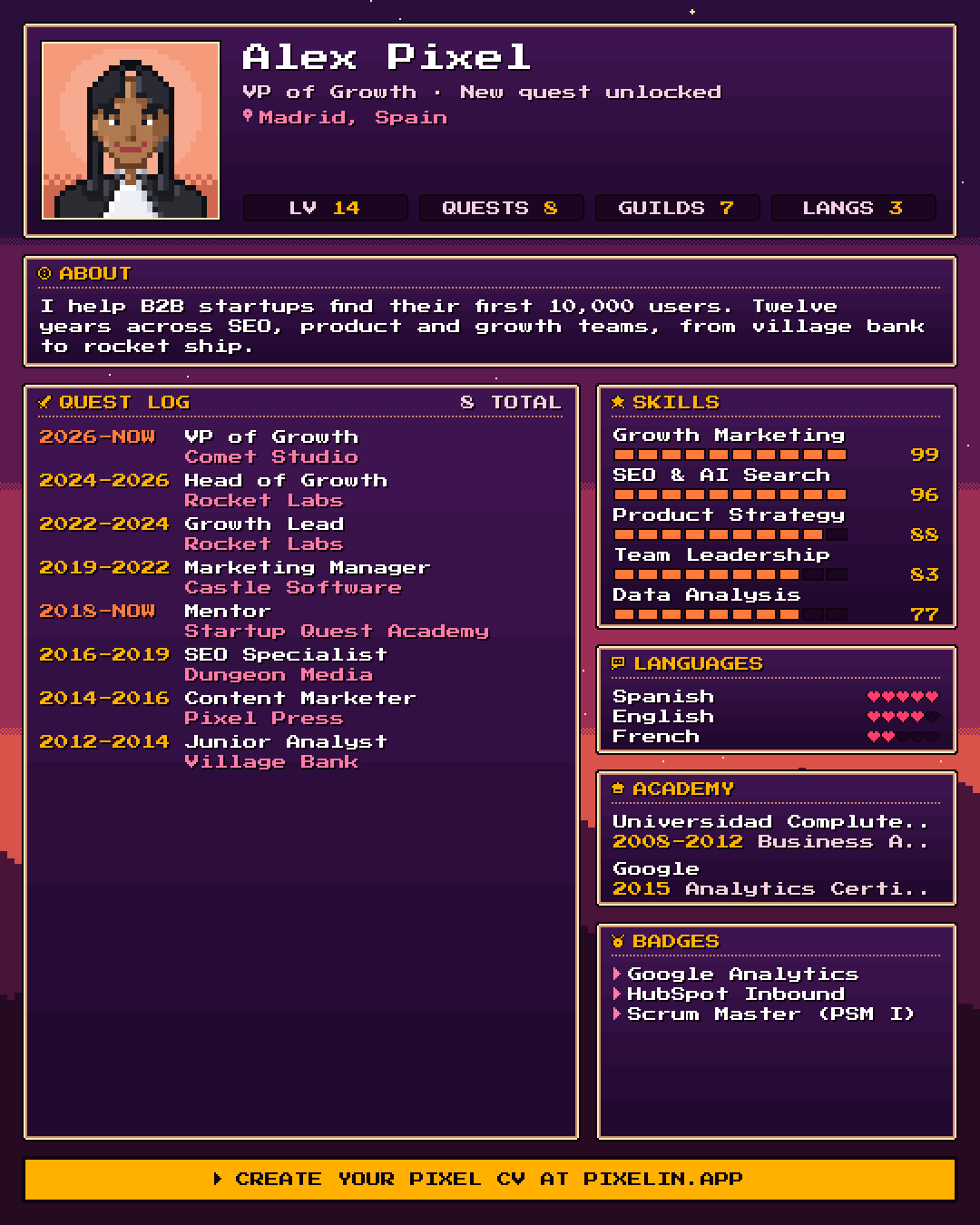
Once LinkedIn shows your new role, save your profile as a PDF again and drop it into Pixelin. Add a few lines of your own: what you are starting, and a thank-you to the people you are leaving behind, by name if they are happy to be tagged.
A quick checklist
- New offer signed, contract read
- Achievements written down, personal files saved, no company files taken
- Manager told first, in person
- Resignation letter sent, last day agreed
- Handover document shared, introductions made
- Equipment returned, goodbye message sent
- LinkedIn recommendation asked for
- LinkedIn and resume updated, new job announced
FAQ
How much notice should I give when I quit?
Whatever your contract says, and never less than the legal minimum where you work. In the US two weeks is the custom. In the UK and most of Europe the notice period is set by law, your contract or a collective agreement, and a month or more is common.
Can I resign by email?
Tell your manager in person or on a video call first, then send the email or letter the same day to make it official. Resigning only by email, without a conversation, is the fastest way to leave on worse terms than you need to.
Do I have to tell my employer where I am going?
No. You can simply say you have accepted another role. If your new job could raise a question under a non-compete or confidentiality clause, check your contract before you share details.
Should I accept a counteroffer?
Only if money was the one reason you were leaving and the offer fixes it for good. If you were leaving for the work, the manager, the growth or the culture, a raise does not change those, and you will often be back where you started within months.
When should I update LinkedIn after quitting?
After your manager knows and the team has been told, ideally once your last day is close or your new job has started. Updating it earlier can announce your departure before you do.
What should I do in my last week?
Finish or hand over your open work, share your handover document, return equipment, move personal files off work devices, say goodbye to the people you worked with and ask for a LinkedIn recommendation while your work is fresh in their mind.

Written by
On the internet since 1995 and launching online products since 2009, from one of the first app marketing agencies to tools like Pixelin. Writes about LinkedIn, resumes and standing out online.